I was once that awkward foreigner in a Parisian café, fumbling with euros, trying to decipher if I was about to insult the waiter or just blend in with the locals. Spoiler: I failed miserably. Tipping is this bizarre social contract where the rules change depending on which side of the ocean you’re standing. And if you’ve ever been caught in the crossfire of a bewildering stare after leaving a tip or not leaving one, you know exactly what I mean. It’s a dance of uncertainty, where one wrong move can land you in the unforgiving territory of cultural faux pas.
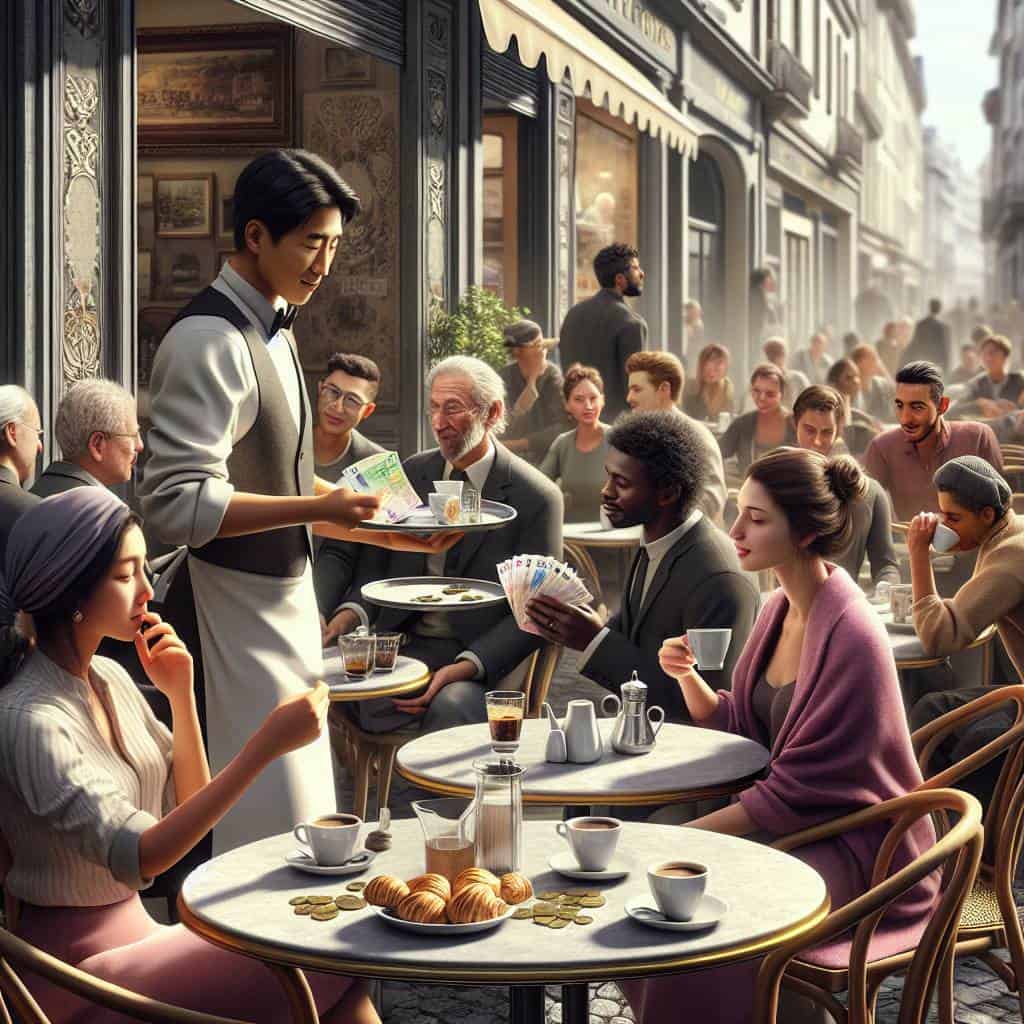
Welcome to the wild world of tipping etiquette. In this article, we’ll tear down the curtain on this global guessing game, exploring the quirks of the practice in Europe, the straightforward yet sometimes baffling customs in the USA, and the subtle nuances across Asia. Who gets tipped, how much, and why it varies so wildly will be laid bare. Trust me, by the end, you’ll be equipped not just to survive but to thrive in this minefield of monetary gestures.
Table of Contents
The Art of Leaving a Tip: My Misadventures from Europe to Asia
Tipping: It’s like playing Russian roulette with your wallet. One wrong move, and you’ve either insulted someone or blown half your budget. My journey through Europe and Asia was a crash course in this delicate dance. In Paris, I thought I was being generous leaving a 15% tip, only to be met with the waiter’s bemused expression. Turns out, service compris is a thing, and I’d just labeled myself as either an overzealous tourist or a clueless American. Fast forward to Italy, where I learned that a few coins are perfectly fine, but in Japan, offering a tip is like trying to hand someone a live grenade. They don’t want it, and they’ll insist on returning it with the same fervor.
Then there’s Asia, where the tipping landscape is as varied as the street food. In Thailand, tipping is appreciated but not expected, a subtle nod to Western influence. But hop over to China, and you might as well be tossing your money into a black hole. The culture there views tipping as an odd Western quirk, and trying to press a few extra yuan into someone’s hand is met with polite refusal. My personal highlight? In Vietnam, where I left a tip in a restaurant, only for it to be returned with a soft smile and a shake of the head. I was left wondering if I’d accidentally offended someone’s ancestors. The art of tipping? More like a minefield of cultural nuances, where every step is a potential faux pas waiting to explode.
The Art of the Tip: A Global Tightrope
In the USA, a tip’s a thank-you nod that can make or break a server’s night. In Europe, it’s more of a subtle pat on the back. Cross into Asia, and it’s a nuanced dance where cultural cues dictate the rhythm. The trick? Navigate each with respect, not arrogance.
Tipping: The Final Frontier of Cultural Quirks
After navigating the choppy waters of tipping across continents, I’ve realized it’s less about the money and more about a cultural handshake. Whether it’s the perfunctory nod in a Parisian café, the unspoken dance in a New York diner, or the silent acknowledgment in a bustling Tokyo restaurant, each tip is a tiny testament to our shared humanity. I’ve been baffled, amused, and occasionally frustrated by the ‘who, how, and how much’ of it all. But ultimately, my globe-trotting adventures have taught me that tipping is just another way we communicate respect and gratitude, albeit wrapped in layers of local nuance.
In the end, it’s about connection. A fleeting bond between strangers where a few coins or bills transcend their monetary value. Sure, the rules are a hodgepodge of history and habit, varying wildly from Europe to Asia to the USA. But they all serve as reminders that we’re in this crazy world together, trying to make sense of the chaos one tip at a time. So, next time you’re faced with that awkward moment of ‘to tip or not to tip’, remember: it’s about more than just the cash. It’s a nod to the universal dance of human interaction—messy, complicated, and beautifully imperfect.