I remember the first time I stood in front of a crumbling wall that was older than my grandmother’s best excuses. It was somewhere in Greece, the sun roasting my skin to a crisp while I squinted at a pile of stones that once held some grand purpose. My guide droned on about empires and gods, but all I could think was how humans have an undeniable talent for building things destined to fall apart. We pour our ambitions into structures, only to leave them for future generations to scratch their heads over. And yet, there’s something captivating in the ruins, a silent reminder of our perpetual dance with hubris and inevitability.
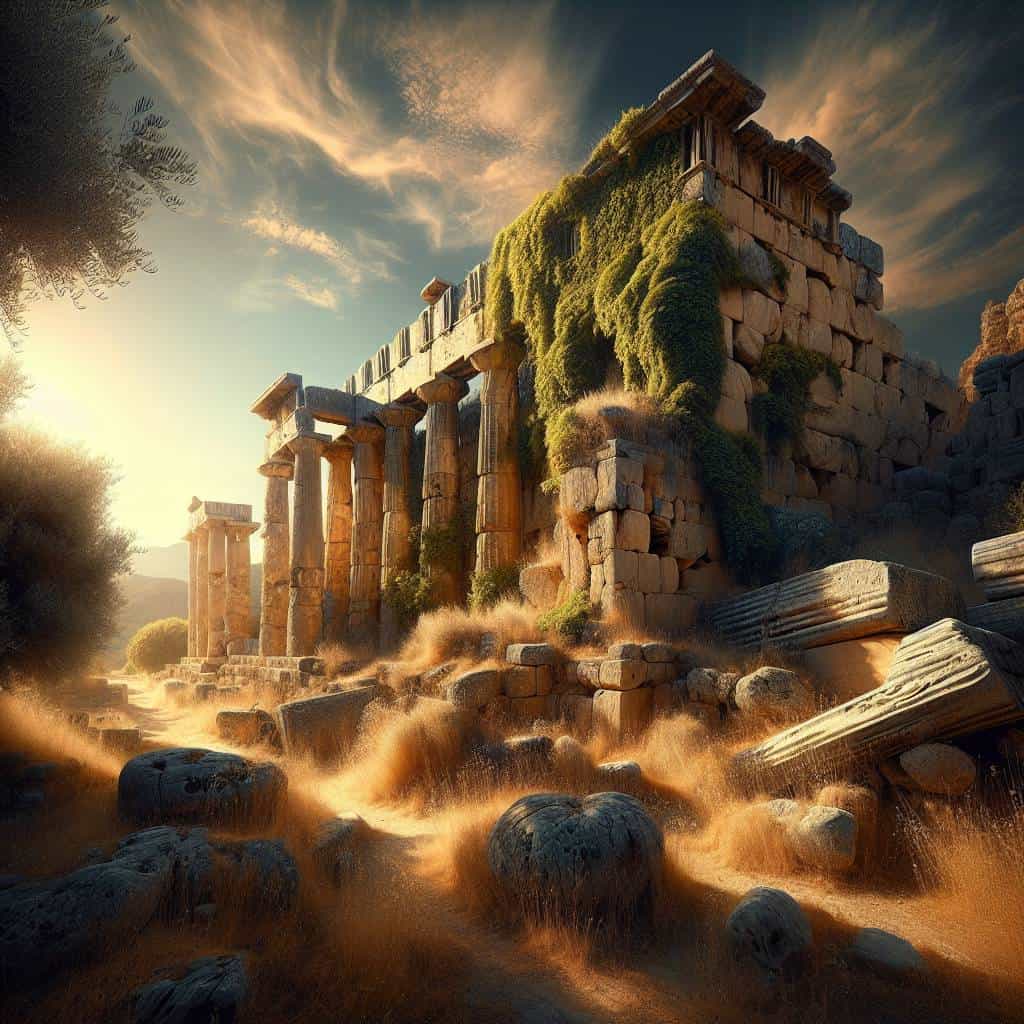
So, what’s the deal with these ancient sites that still lure us in droves? In this article, I’ll pepper in tales from my own ventures to historical hotspots across Greece and Italy, where each ruin tells a story more layered than an onion. We’ll sift through history’s detritus, not for the sake of a postcard-perfect travelogue, but to uncover the raw, unfiltered narratives tucked between the cracks. Get ready to ditch the fluff as we explore history’s playground, where every toppled column and weathered facade has a tale waiting to be told.
Table of Contents
Why My Foot Fell Asleep in a Roman Amphitheater: A Tale of Italian Adventures
There I was, perched on a stone bench in the Roman amphitheater of Pozzuoli, Italy, absorbing the ancient air with the same enthusiasm one might reserve for a glass of fine Chianti. But as I marinated in the ambiance, my foot decided to take an unscheduled siesta. And let me tell you, the mix of tingling numbness and the unsettling awareness that I had become one with history (quite literally) was an experience worthy of any tragicomedy penned by the ancients themselves. You see, not all stories about exploring historical sites are about enlightenment; some are about the unexpected bond you form with the past—like when your foot falls asleep on the very stones where gladiators once stood.
Now, why was I enduring this pins-and-needles affair, you might wonder? It wasn’t just the thrill of sitting amidst ruins that have seen more drama than a daytime soap. It was a moment of reflection on the impermanence of empires and the absurdity of it all—humans toiling to create grand structures only for them to crumble into picturesque rubble. In that amphitheater, where the echoes of ancient clashes resonate through the stones, I pondered the grandiosity and folly of human ambition. My foot may have been asleep, but my mind was wide awake, contemplating the narratives etched into every weathered surface. This is what makes visiting sites like these more than just a tourist checklist. It’s a chance to connect, to feel history’s pulse, even if it means enduring a temporary loss of sensation in your lower extremities.
Whispers of the Past
In the silent company of ancient ruins, we find the echoes of ambition and folly. Greece and Italy’s stones don’t just tell stories; they murmur the secrets of humanity’s persistent dance with grandeur and decay.
Stone Whispers and Echoes of the Past
Standing amidst these crumbling behemoths of yore, I felt a peculiar kinship with the ghosts of Greece and Italy. The ruins, in their silent, stoic way, have more stories to tell than any well-lit museum piece. They don’t sugarcoat history; they simply bear its weight. Each chipped column and fallen statue is a testament to human ambition and the relentless passage of time. In the end, it’s not about the grandiosity of what once was, but the quiet resilience of what remains.
Yet, as I brushed the dust off my shoes and turned away from these ancient theatres of human endeavor, I felt a strange comfort. It’s in our nature to build, to dream, and inevitably, to fail. But the ruins remind me that failure isn’t the end. It’s merely a pause, a breath before the next chapter. So, here’s to the stones that outlast us, and to the stories they whisper through the ages. They are a humbling reminder of our fleeting presence in the grand narrative we call history.