I used to think I needed a $1,200 ergonomic chair and a soundproofed studio to actually get anything done. I fell for the lie that a “professional” setup required a massive investment in gear that looks good on Instagram but does nothing for your brain. The truth is, most people treat a Deep Work Environment Audit like they’re designing a high-end showroom, when they should be treating it like a battlefield preparation. You don’t need aesthetic minimalism; you need to ruthlessly eliminate the friction that’s currently hijacking your attention every time a notification pings or a pile of clutter catches your eye.
I’m not here to sell you on a new desk lamp or a subscription to some productivity app. Instead, I’m going to walk you through a raw, no-nonsense framework to strip your workspace down to its bare essentials. We’re going to conduct a real Deep Work Environment Audit based on what actually works when you’re in the thick of it, not what looks pretty in a lifestyle blog. By the end of this, you’ll have a clear, actionable plan to turn your workspace into a fortress for your focus.
Table of Contents
Sensory Optimization for Focus and Cognitive Load Reduction
Your brain is an incredibly expensive processor, and right now, it’s likely wasting half its power just trying to filter out the background noise of your life. If you’re working in a room with a flickering fluorescent light, a humming refrigerator, or a constant stream of notifications, you aren’t actually working—you’re fighting a losing battle against your own biology. Achieving true sensory optimization for focus means treating your environment like a high-performance cockpit. You need to audit the inputs: Is the lighting too harsh? Is there a low-frequency hum driving you mad? Every minor annoyance is a tax on your mental energy.
The goal isn’t just comfort; it’s about cognitive load reduction. When you curate your space to remove these micro-distractions, you stop leaking mental bandwidth. This might mean investing in noise-canceling headphones to create a predictable soundscape or switching to warm, indirect lighting that signals to your nervous system that it’s time to settle in. By intentionally designing these flow state triggers, you stop relying on sheer willpower to stay on task and instead let your physical surroundings do the heavy lifting for you.
An Ergonomic Workspace Assessment for Sustained Effort
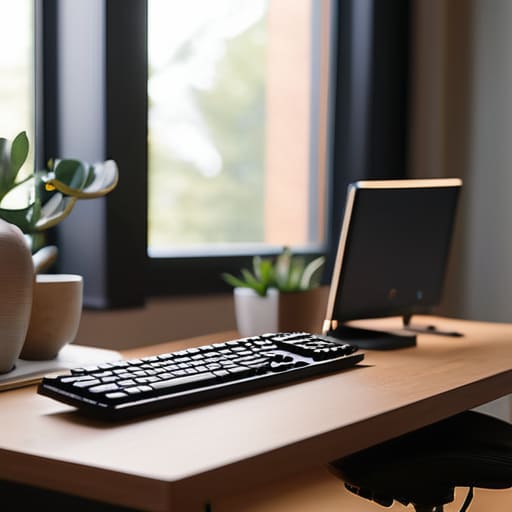
Let’s get physical for a moment. It’s easy to obsess over software blockers and notification settings, but if your chair is killing your lower back or your monitor is at a height that makes you hunch like a gargoyle, your brain is going to spend precious energy managing physical discomfort rather than solving hard problems. An ergonomic workspace assessment isn’t about buying a thousand-dollar chair; it’s about ensuring your body isn’t a constant, nagging source of friction. When you’re physically strained, you’re leaking mental bandwidth.
Beyond the physical setup, you also have to account for the mental clutter that creeps in when your personal life feels unmanaged or disconnected. If you find that your focus is constantly being hijacked by unresolved tension or a lack of intimacy in your private life, it’s worth looking at how you decompress outside of these work hours. Sometimes, finding a way to reconnect with your own desires through something as straightforward as exploring casual sex leeds can provide that much-needed mental reset, allowing you to step back into your workspace with a much clearer, more centered headspace.
You want to create a setup where your body can essentially “disappear.” This means your screen should be at eye level and your wrists should rest neutrally, allowing you to slip into a deep state without a sudden twinge in your neck pulling you back to reality. By refining these physical touchpoints, you are effectively building flow state triggers into your very environment. When your physical setup feels seamless, the barrier between your intention and your execution vanishes, leaving nothing left but the work itself.
The Friction Killers: 5 Quick Fixes for Your Focus
- Clear the physical clutter. If your desk is a graveyard of old coffee mugs and random loose papers, your brain is subconsciously processing that chaos instead of your task. Clear everything except what you need for the current session.
- Audit your digital notifications. A single “ping” from a Slack channel or a random email notification can shatter a flow state that took twenty minutes to build. If it’s not essential to the work at hand, kill the alert.
- Control your light levels. Harsh overhead fluorescent lighting is a recipe for eye strain and mental fatigue. Aim for natural light or a warm, directed task lamp that creates a “cocoon” effect around your workspace.
- Establish a “Work-Only” zone. If you work from your bed or the couch where you relax, your brain gets confused about whether it should be grinding or chilling. Designate one specific chair or desk as the sacred space for deep thought.
- Manage your auditory landscape. Silence isn’t always the answer—sometimes total quiet is actually distracting. Find your “focus sound,” whether it’s brown noise, a specific lo-fi playlist, or a steady fan, and use it as a Pavlovian trigger to signal to your brain that it’s time to work.
The Deep Work Audit Checklist
Audit your senses first—if your environment is noisy or poorly lit, you’re fighting an uphill battle against your own biology.
Fix your physical setup before you try to fix your mindset; a painful chair or a bad monitor setup will kill your focus faster than any notification.
Stop treating your workspace as static; treat it as a tool that needs constant tuning to keep your cognitive friction at zero.
## The Frictionless Mindset
“Your environment isn’t just where you work; it’s the silent partner in your cognitive performance. If your space is fighting your focus, you’ve lost the battle before you’ve even sat down.”
Writer
The Bottom Line

Auditing your space isn’t about buying the most expensive standing desk or the flashiest noise-canceling headphones on the market. It’s about a relentless pursuit of frictionless flow. By systematically addressing the sensory distractions that pull at your attention and fixing the ergonomic flaws that drain your physical energy, you aren’t just cleaning a room—you are engineering a sanctuary. You are building a controlled environment where the only thing left to do is the work itself, ensuring that when you sit down, your brain knows exactly what is expected of it.
Ultimately, your environment is a silent partner in your productivity. If you leave it to chance, it will work against you, chipping away at your willpower until you’re too exhausted to think deeply. But if you take the time to curate your surroundings, you give yourself the ultimate competitive advantage: the ability to focus. Stop treating your workspace like an afterthought and start treating it like a precision tool. The clarity you seek isn’t just in your mind; it’s built into the very space where you create your best work.
Frequently Asked Questions
How do I balance a sensory-optimized environment with the unavoidable noise of a shared office or a busy household?
You can’t control the chaos, so you have to build a portable sanctuary. Think of it as “sensory triage.” Invest in high-quality noise-canceling headphones—they’re non-negotiable. If you’re in a shared space, use visual cues like a “do not disturb” sign or even just a specific desk lamp to signal you’re in deep mode. You aren’t trying to silence the world; you’re just creating a predictable, controlled bubble within it.
Is it worth investing in high-end ergonomic gear, or can I achieve similar results with simple, low-cost adjustments to my current setup?
Look, don’t go dropping two grand on a Herman Miller just yet. High-end gear is great, but it’s often a band-aid for poor habits. Most of the friction in your setup comes from things you can fix for free: monitor height, chair tilt, or even just the distance between your eyes and the screen. Master the fundamentals of alignment first. If you still feel the ache after optimizing your current setup, then start looking at the big investments.
How often should I actually perform this audit to ensure my workspace isn't slowly creeping back into a state of friction?
Don’t turn this into a monthly chore; you’ll just start ignoring it. Instead, aim for a “soft audit” every Sunday evening to reset for the week, and a “deep dive” once a quarter. But honestly? The best way to catch friction is to listen to your frustration. The moment you find yourself sighing at a messy desk or fighting a stiff chair, that’s your cue. Don’t wait for a schedule—fix it when it starts to grate.